
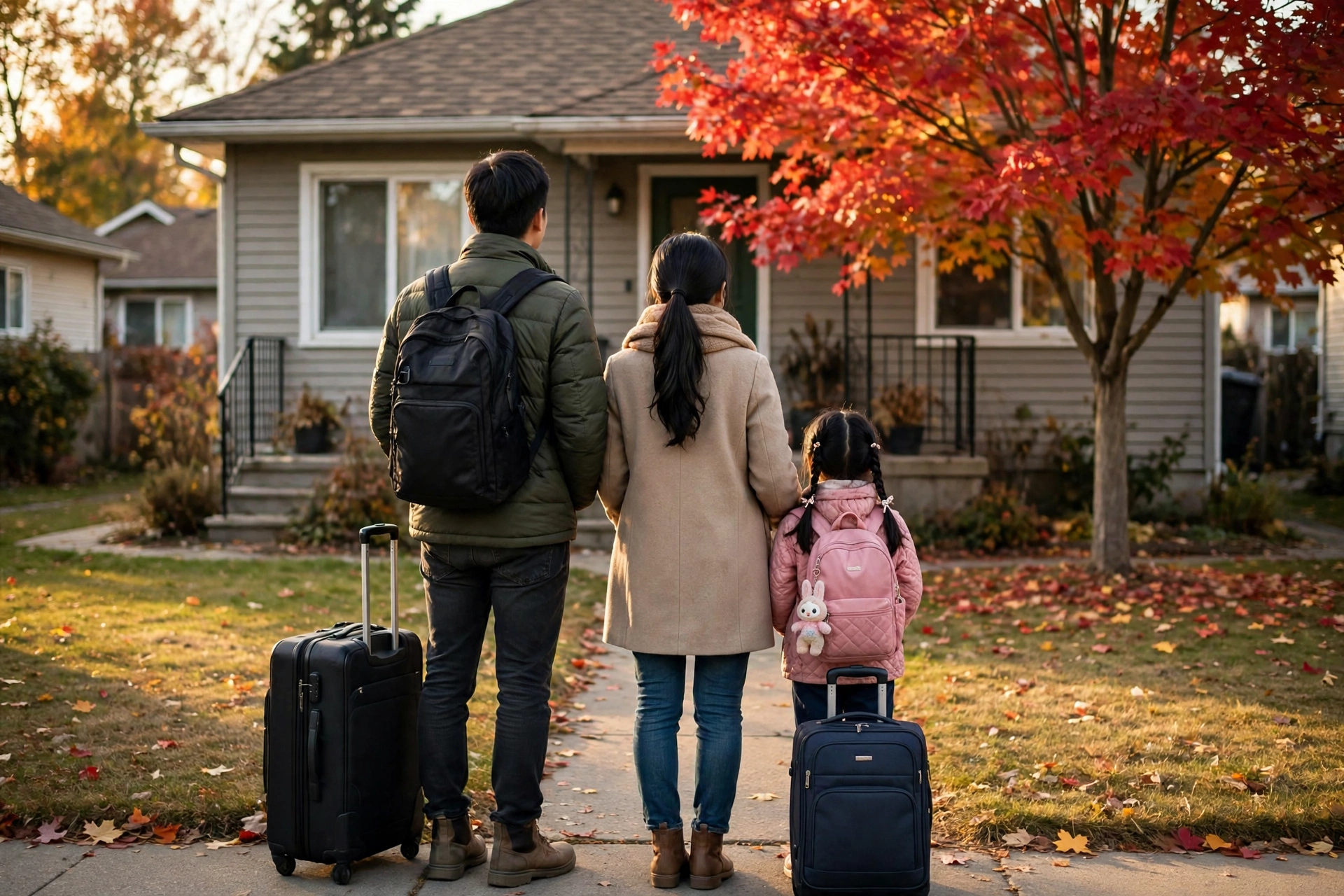
Two Years in Canada on an Open Work Permit: Paperwork, Mistakes, and What I’d Do Differently
Let me introduce myself first: I’m Devin. I’ve been in Canada for over two years, living in a small city in Alberta that most people have never heard of. I’m here on an open work permit and work at a local plant. My wife is an accountant, and our daughter just started Grade 1.
Over these two years I’ve been through almost every piece of paperwork that work-permit life throws at you — some of it smooth, some of it a runaround. This blog is where I write it all down, one thing at a time: immigration procedures, buying and maintaining a car, renovating and fixing things myself, and what family life in a small Canadian city actually costs. No big theories — just what I actually did, what it cost, and where I went wrong.
This first post is the overview, basically a table of contents. Everything in it gets its own detailed post later.
1. The work permit: the best thing about an open permit is freedom
My permit is an open work permit — it’s not tied to one employer. That means changing jobs, picking up part-time work, or taking the odd side job are all allowed status-wise. For a newcomer that matters a lot, because your first job is rarely the right one, and being able to walk away takes the panic out of it. My wife is on a post-graduation work permit building her accounting career, and our immigration plan (the provincial AAIP route) basically revolves around her occupation. More on that in its own post.
One lesson I’ve learned: don’t write off small cities. Housing and living costs out here are a fraction of Calgary’s. There are fewer jobs, true — but if you’re willing to work with your hands and put up with the winters, a small city makes it much easier to actually put down roots.
2. SIN, banking, and your kid’s RESP: get the order right
Adults on a work permit can get a SIN (Social Insurance Number) right away, and bank accounts and credit cards follow naturally. My everyday card is a CIBC Costco Mastercard.
Where we got stuck was our daughter. She’s on a Visitor Record, with no work authorization, so she can’t get a SIN. Without a SIN, a child can’t be the beneficiary of an RESP (Registered Education Savings Plan) — which also means no CESG government grant money. I asked around thoroughly; there’s no workaround. You simply have to wait until the family’s status changes (for example, a provincial nomination and then PR). In the meantime, her education savings sit in my own TFSA. If you have kids and your status isn’t settled yet, sort out this order of operations before you waste a trip to the bank.
3. Finding a family doctor: solve “having one” first
In Canada, healthcare starts with a family doctor — and family doctors are genuinely hard to find. We were registered with a clinic in Calgary for a while before we finally got a doctor locally, and it cost us plenty of pointless driving. One piece of experience: registering with a family doctor should be one of the first things you do after landing. Don’t wait until somebody’s sick to start looking.
4. School: PD Days are the hidden test for working parents
Our daughter is in Grade 1 at a local Catholic elementary school. Canadian schools have something called PD Days (professional development days for teachers) — school is closed, but parents still work, and nobody’s watching the kids. The school board runs paid childcare for those days, $50 a day per child, with limited spots you have to register for early, plus a subsidy process on top. If both parents work, you need these days planned a term ahead. I’ll write the whole thing up separately — registration process, costs, subsidy — in one place.
5. Cars: a used car is your ticket to small-city life
In a small city, no car means no legs. We bought a used 2018 Ford Escape. I do my own wrenching, so maintenance and small repairs are on me: recently the tire pressure sensor light came on, and I relearned all four sensors with my own Autel diagnostic tool — zero dollars at a shop. Winter tire swaps, and what to do when you lose the wheel lock key, are all coming as tutorials. Alberta winters at -20 or -30 are normal, so winter tires, battery and antifreeze aren’t where you cheap out — they’re survival gear.
6. What this blog will cover
Three categories, three sides of my life here:
- Newcomer Life: how AAIP/RRS actually works, the everyday paperwork of work-permit life, doctors, school, and the real numbers on taxes and costs;
- DIY & Car Care: renovation tutorials and used-car maintenance logs — keep the money you’d pay the shop;
- Gear Reviews: the Milwaukee power tools, diagnostic gear and camping kit I actually use, reviewed after long-term use — the good and the bad.
And the standard disclaimer: everything here is my personal experience, not advice from an immigration consultant or a lawyer. Policies change constantly — for anything involving your own status, go by the official sources and consult a professional when it matters.
Next post: the RESP problem — why your kid can’t get one without a SIN. I suspect a lot of newcomer families are stuck on exactly this step.